
The land is not the whole story. It is the beginning of one.
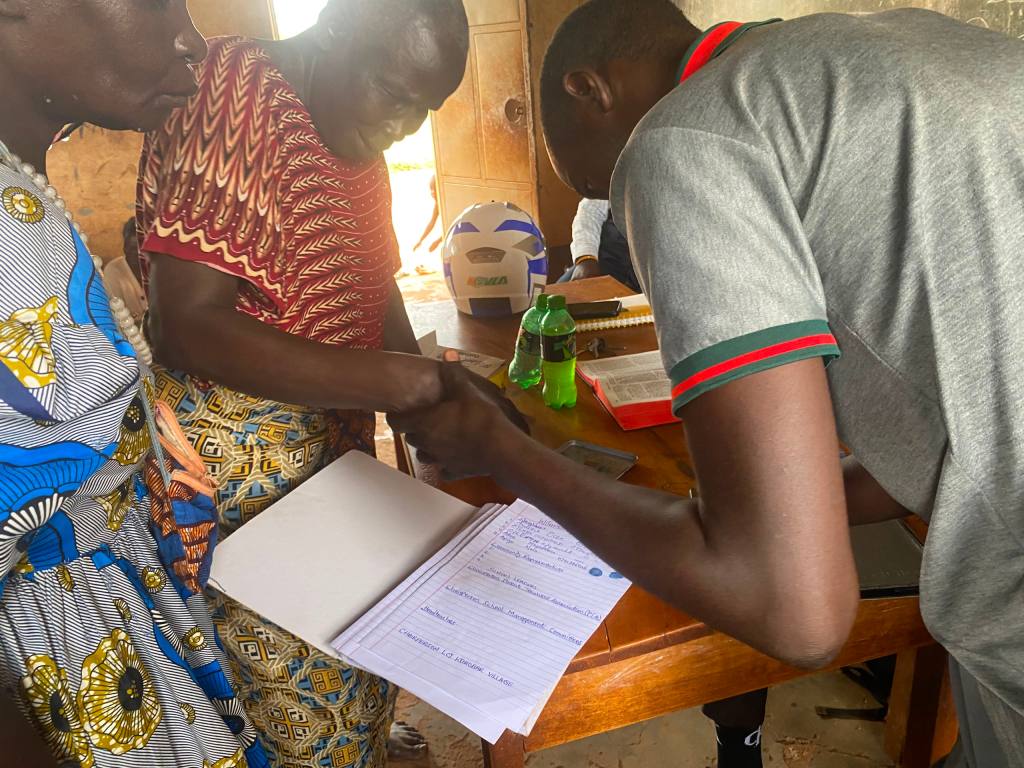
On July 9, 2026, 10.396 acres in Korobar Village, northern Uganda, were formally handed over to “Agape Baptist Church Korobar / Amigos Internacionales.” Fifteen people signed the document, including local church, school, community, and Amigos leaders.
That matters because this is not land chosen from a distance and assigned a purpose by outsiders. It is a place where a church congregation already exists, where children are already learning, and where local leaders have placed their names beside a shared commitment.
At the center of the property is Orua Community Nursery and Primary School. A June 27 assessment recorded 247 enrolled children. The site already includes three permanent classrooms, two grass-thatched classroom structures, an office and store, a football field, five teacher huts, and two latrine blocks.
There is also an existing borehole. It works and provides water, although it is inefficient and could produce more with the right improvement. That distinction is important. We do not need to make the situation sound worse than it is to explain why the work matters.
The school transition is still underway, with January 2027 as the working goal. The land has been secured, but the work of turning the existing school, church, water source, and community commitments into a strong MissionPoint is only beginning.
That is the honest version of the story.
It is tempting in nonprofit work to speak about a project as though every promise has already become a finished building. Korobar is not there yet. We expect renovation work during the current school holiday, but we will not call it completed until the field team provides dated photographs and confirms exactly what was done. Medical outreach and reconstructive-care planning are also developing, but dates and scope must be confirmed before we present them as scheduled.
Honesty does not weaken the story. It shows why the story deserves to be followed.
A MissionPoint is not a single construction project. It is Amigos’ long-term approach to community development: local church leadership, clean water, education, medical care, practical skills, farming, and a path toward local sustainability. Not every piece arrives at once. Each part must grow from the people who will still be there when the visitors and cameras are gone.
Korobar already has something more valuable than an empty piece of property. It has people who have chosen to work together.
Pastor Santo Okulu, Head Teacher Mwaka David, local government and school leaders, parents, and the Amigos field team did more than attend a ceremony. By signing the handover, they accepted responsibility for what comes next.
Now the work becomes patient and practical.
Classrooms must be assessed and strengthened. The school transition must be completed carefully. The borehole’s output should be evaluated. Church leadership and community participation must remain central. Health and farming plans must move forward only as local capacity, verified needs, and responsible funding come together.
This is how sustainable work is built—not through a burst of activity followed by disappearance, but through faithful presence.
Korobar will not become a MissionPoint because Amigos places a sign on the property. It will become one as local leaders, families, churches, medical workers, teachers, and donors continue taking the next faithful step together.
The land is secured. The people are present. The commitments are written.
Now the real work begins.
Follow the verified development of Korobar MissionPoint at amigosii.org/korobar-missionpoint. If you would like to help Amigos continue building locally led MissionPoints, you can support the work here.


Leave a Reply